
Property Monitoring
Relatives Say “Everything Is Fine”—But What Is Really Happening on Your Property?
When relatives say everything is fine, it may still be worth checking what is visible on the ground — and what is being missed by phone calls and memory.
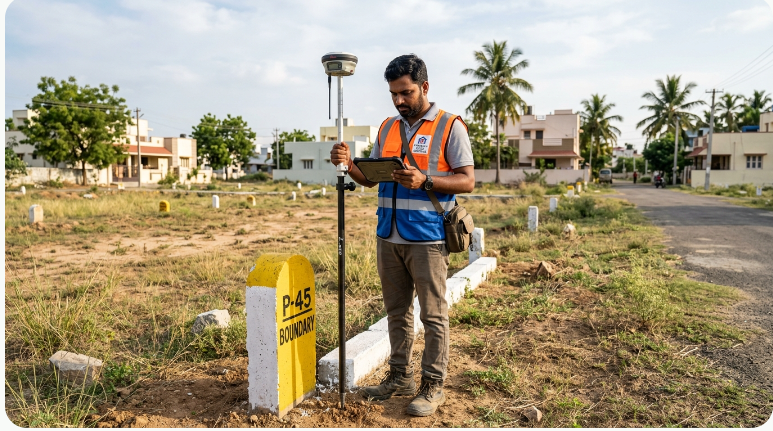
· Property Monitoring
When a relative says “everything is fine,” it often sounds reassuring. But for an NRI owner who is living overseas, a reassurance from a family member is not the same as verified evidence. Land changes slowly, and those changes are rarely obvious until the problem is already serious.
Vacant land in India can be altered without anyone formally notifying the owner. A fence can creep a few feet. A temporary shed can appear. An access path can be blocked. A neighbour can quietly extend cultivation. The danger is not always a dramatic event; it is often a gradual erosion of boundaries, control, and certainty.
Why family reassurances are not enough
Family members often mean well, but they are rarely neutral observers. They may not want to raise alarm. They may not want to challenge a local neighbour. They may also simply be relying on memory rather than evidence.
A call from a relative can confirm that “the plot looks okay,” but that is usually a statement about their impression, not a documented fact. It does not tell you whether a boundary stone was moved, whether a structure appeared, or whether access to the land is still clear and legal.
What can actually change while you are away
Remote land ownership creates a gap between the records and the ground. That gap can be filled by anything from minor boundary creep to more serious encroachment. Common problems include:
- Temporary structures being erected on a corner or access path
- Boundary markers being shifted or replaced without proper survey verification
- Vegetation or debris hiding the actual plot limits
- Fences extending beyond the legal line
- Unauthorized use of the land while no one is actively monitoring it
- Legal documents and physical boundaries no longer matching on the ground
What makes these issues dangerous is the time lag. A problem can exist for months before anyone notices, and by then the pattern is harder to reverse.
What a real inspection checks
A proper site verification is not just a quick glance from the roadside. It is a structured fact-finding visit with attention to the specifics that usually matter most:
- Current physical boundary markers and whether they still align with the plot
- Encroachments, temporary sheds, or fencing extensions
- Site access, road condition, and any barriers around the property
- Signs of land-use change such as crops, dumping, or construction
- GPS-based verification that the land being inspected is the correct parcel
- Photo and video evidence that can be reviewed after the visit
This is the difference between “it seems fine” and“here is evidence of what is actually happening on the ground.”
The reality gap: what people say vs what the property shows
| Situation | What a relative may say | What a ground check can show |
|---|---|---|
| Boundary condition | “The boundary looks fine.” | Visible markers are misaligned, partially hidden, or moved from their original location. |
| Access | “The road is still open.” | Access has been partially blocked, narrowed, or used without permission. |
| Use of land | “No one is using it.” | Temporary construction, dumping, cultivation, or occupation has already begun. |
| Site condition | “I checked recently.” | Photos and GPS evidence reveal a different parcel, a different angle, or a different condition than reported. |
A phone call may tell you what someone hopes is true. A field inspection tells you what is actually true on the ground.
Why independent checking matters
A neutral inspection removes emotion, assumptions, and local pressure from the equation. It reduces the chance that a family member is protecting relationships instead of the property. It also provides a clear record you can keep for future comparison, dispute prevention, and planning decisions.
For NRIs and absentee owners, this matters even more because distance increases the risk of delay. What feels minor in a single conversation can become a larger legal or financial issue when no one is checking the land for months or years.
Monitoring is not a luxury — it is risk control
The solution is not to distrust everyone. It is to replace guesswork with evidence. When a property is valuable, occupied or empty, and far away, the right question is not “who told you it is fine?” but “what can be verified on the ground?”
A documented inspection creates a baseline. Repeat inspections create a timeline. That timeline is what protects your property when memory fades and relatives are no longer the best source of truth.
Conclusion
Relatives may genuinely mean well, but “everything is fine” is not a substitute for actual verification. If your land matters to your financial future, your family legacy, or your planning for the years ahead, then ground truth matters more than reassurance.
The safest approach is simple: verify the land, document what is there, and keep a clear record over time. When you are not in India, the most reliable answer is not a family update — it is evidence from the property itself.
Need proof of what is really happening on your property?
A physical verification gives you the evidence you need to decide whether a reassuring update is actually accurate.